Completed
McGee SR. Cheyne-Stokes breathing and reduced ejection fraction. Am J Med. 2013;16–540.
Class Central Classrooms beta
YouTube videos curated by Class Central.
Classroom Contents
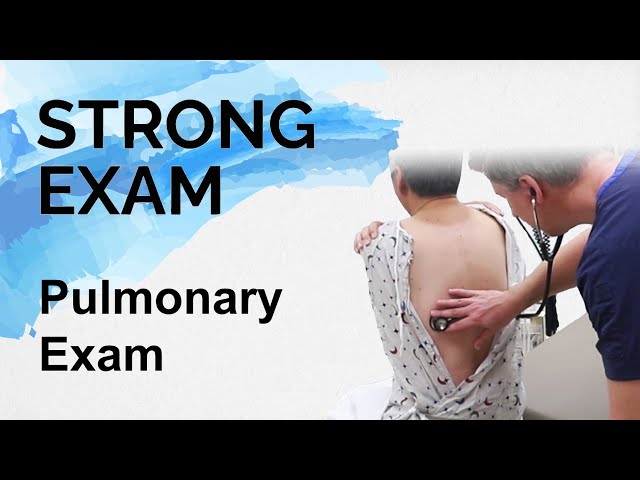
The Pulmonary Exam and Lung Sounds - Comprehensive Guide
Automatically move to the next video in the Classroom when playback concludes
- 1 @ Introduction
- 2 @ Inspection of the respiratory pattern
- 3 @ Remainder of inspection e.g. resp. distress, barrel chest, clubbing
- 4 @ Review of lung anatomy for auscultation
- 5 @ Demonstration of lung auscultation
- 6 @ Lung Auscultation - breath sounds
- 7 @ Lung Auscultation - adventitious sounds e.g. crackles, wheezing
- 8 @ Concluding clinical pearls & documentation of the lung exam
- 9 Hooker EA, O’Brien DJ, Danzl DF, Barefoot JAC, Brown JE. Respiratory rates in emergency department patients. J Emerg Med. 1989;9–132.
- 10 McFadden JP, Price RC, Eastwood HD, Briggs RS. Raised respiratory rate in elderly patients: a valuable physical sign. Br Med J. 1982;26–627.
- 11 McGee SR. Cheyne-Stokes breathing and reduced ejection fraction. Am J Med. 2013;16–540.
- 12 de Mattos WL, Signori LGH, Borges FK, Bergamin JA, Machado V. Accuracy of clinical examination findings in the diagnosis of COPD. J Bras Pneumol. 2009;4–408.
- 13 Pierce JA, Ebert RV. The barrel deformity of the chest, the senile lung and obstructive pulmonary emphysema. Am J Med. 1958;–22.
- 14 Golub RM. Validity and Reliability of the Schamroth Sign for the Diagnosis of Clubbing. JAMA. 2010;39-161.
- 15 Holleman DR, Simel DL. Does the Clinical Examination Predict Airflow Limitation? JAMA. 1995;23-319.
- 16 Piinla P, Sovijarvi ARA. Crackles: recording, analysis and clinical significance. Eur Respir J. 1995;39-2148.
- 17 Wang CS, et al. Does This Dyspneic Patient in the Emergency Department Have Congestive Heart Failure? JAMA. 2005; 244-1956.

