
Completed
Intro
Class Central Classrooms beta
YouTube videos curated by Class Central.
Classroom Contents
Glassy Dynamics in Dense Active Matter - From Cells to Particles
Automatically move to the next video in the Classroom when playback concludes
- 1 Intro
- 2 The glass transition: from liquid to disordered solid
- 3 Ubiquitous examples
- 4 What happens when approaching a glass transition
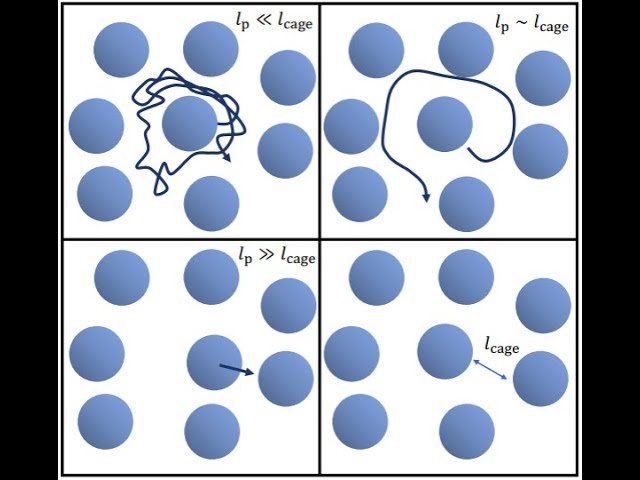
- 5 Conceptual explanation: cage effect
- 6 What about the glass transition in living matter?
- 7 Cells exhibit glass-like behavior
- 8 Glassy behavior linked to diseases and development
- 9 Can we understand cell collective as a 'simple' glassy fluid?
- 10 Minimal-model approach: treat cells as an active glassy fluid
- 11 'Simpler' active glassy systems
- 12 Model active fluid: active Brownian particles
- 13 Nonmonotonic dynamics
- 14 Curves collapse!
- 15 Why is the maximum at the cage length?
- 16 Only the length scale changes
- 17 What if we change the active matter model?
- 18 What if we make particles softer?
- 19 Insight reconciles different departures in literature!

