Completed
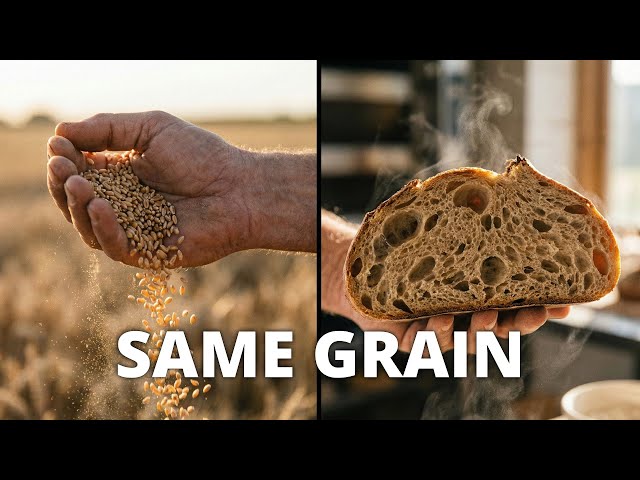
Your flour might be the problem
Class Central Classrooms beta
YouTube videos curated by Class Central.
Classroom Contents
Understanding Flour Quality and Ancient Grains for Better Sourdough Baking
Automatically move to the next video in the Classroom when playback concludes
- 1 Your flour might be the problem
- 2 What's the wildest thing on your farm?
- 3 Farming conditions in Idaho's Teton Valley
- 4 Origin story — from family farm to online marketing
- 5 How a friend's research led to einkorn
- 6 First American einkorn — scaling from 2 bags of seed
- 7 Spring vs winter vs facultative wheat varieties
- 8 Einkorn vs modern wheat — flexibility, yield, drought
- 9 Regenerative farming and companion cropping
- 10 Can einkorn grow on damaged soils?
- 11 Einkorn's natural hull — mold and moisture resistance
- 12 Does location change einkorn quality?
- 13 What makes a good or bad growing season
- 14 Surviving hailstorms — the fear every farmer lives with
- 15 How crop rotation drives grain quality
- 16 Short growing seasons and maximizing soil fertility
- 17 Could you grow "super einkorn" with unlimited resources?
- 18 Farming experiments Jade is still running
- 19 The number one tip for other farmers
- 20 Why single-source flour changes year to year
- 21 Falling number explained — the key baking metric
- 22 How growing conditions affect each ancient grain
- 23 Adapting your baking to variable flour
- 24 Flour buyer's checklist — what to look for
- 25 Why home milling beats buying flour
- 26 How to evaluate grain quality as a buyer
- 27 The dream machine — a drone that reads every plant
- 28 Home milling tips — measure in grain cups, mill fresh
- 29 How to store whole grains at home

