Completed
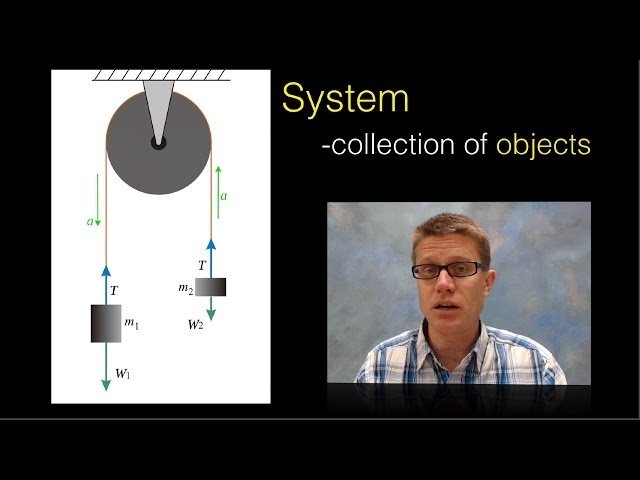
Systems and Objects
Class Central Classrooms beta
YouTube videos curated by Class Central.
Classroom Contents
AP Physics 1 and 2 Essentials - Complete Curriculum Framework
Automatically move to the next video in the Classroom when playback concludes
- 1 Systems and Objects
- 2 Fundamental Particles
- 3 Atomic Nucleus
- 4 The Bohr Atom
- 5 Objects
- 6 Electric Charge
- 7 Positive and Negative Charge
- 8 Elementary Charge
- 9 Inertial Mass
- 10 Gravitational Mass
- 11 Equivalence Principle
- 12 E=mc2
- 13 Wave-Particle Duality - Part 1
- 14 Wave-Particle Duality - Part 2
- 15 Spacetime
- 16 Density
- 17 Resistivity
- 18 Thermal Conductivity
- 19 Electric Permittivity
- 20 Magnetic Permeability
- 21 Magnetic Dipole Moment
- 22 Vector Field
- 23 Scalar Field
- 24 Gravitational Force
- 25 Gravitational Field Strength
- 26 Electric Force
- 27 Electric Field Strength
- 28 Electric Field of a Sphere
- 29 Electric Field of a Dipole
- 30 Electric Field of Parallel Plates
- 31 Magnetic Force
- 32 Magnetic Field of a Wire
- 33 Magnetic Field of a Dipole
- 34 Magnetic Domains
- 35 Contour Lines
- 36 Equipotential Lines
- 37 Average Value of the Electric Field
- 38 Motion
- 39 Forces
- 40 Interaction Forces
- 41 Newton's Third Law
- 42 Vector Sum of Forces
- 43 Free-Body Diagrams
- 44 Simple Harmonic Motion
- 45 Calculating the Gravitational Force
- 46 Calculating the Electric Force
- 47 Measuring the Magnetic Force
- 48 Contact Forces
- 49 Momentum
- 50 Impulse
- 51 Work Energy Principle
- 52 Torque
- 53 Rotational Motion
- 54 Angular Momentum
- 55 Gravitational Forces
- 56 Electromagnetic Forces
- 57 Strong Nuclear Force
- 58 Motion of the Center of Mass
- 59 Position, Velocity and Acceleration
- 60 Newton's Second Law
- 61 Linear Momentum
- 62 Force-Time Graph
- 63 Total Energy
- 64 Work and Energy
- 65 Heating
- 66 Mass and Energy
- 67 The Vector Properties of Angular Quantities
- 68 Angular Momentum of a System
- 69 Angular Impulse
- 70 Magnetic Properties
- 71 Electromagnetic Induction
- 72 Electrostatic Induction
- 73 Resistors and Capacitors
- 74 Electric Circuits
- 75 Systems
- 76 Conservation Laws
- 77 Object Interactions
- 78 System Boundaries
- 79 Kinetic Energy
- 80 Internal Energy
- 81 Potential Energy
- 82 Kinetic and Potential Energy
- 83 Work and Power
- 84 Heat
- 85 Thermodynamics and P-V Diagrams
- 86 Emission and Absorption Spectra
- 87 Kirchoff's Loop Rule
- 88 Bernoulli's Equation
- 89 Energy-Mass Equivalence
- 90 Conservation of Charge in Reactions
- 91 Conservation of Electric Charge
- 92 Kirchhoff's Junction Rule
- 93 Conservation of Linear Momentum
- 94 Elastic and Inelastic Collisions
- 95 Center of Mass
- 96 Conservation of Angular Momentum
- 97 Rotational Inertia
- 98 Continuity Equation
- 99 Conservation of Nucleon Number
- 100 Transverse and Longitudinal Waves
- 101 Mechanical and Electromagnetic Waves
- 102 Wave Amplitude
- 103 Wave Energy
- 104 Wave Period and Frequency
- 105 Wavelength
- 106 Wave Equation
- 107 Wave Speed
- 108 Doppler Effect
- 109 Wave Interference
- 110 Wave Diffraction
- 111 Interference Patterns
- 112 Diffraction Effects
- 113 Wave Superposition
- 114 Traveling Waves
- 115 Standing Waves
- 116 Harmonics
- 117 Beats
- 118 Light Absorption, Reflection, and Transmission
- 119 Specular Reflection
- 120 Refraction of Light
- 121 Ray Diagrams - Mirrors
- 122 Ray Diagrams - Lenses
- 123 Electromagnetic Radiation
- 124 Electromagnetic Waves
- 125 Photons
- 126 Wave-Particle Duality of Light
- 127 Matter as a Particle
- 128 Matter as a Wave
- 129 Gas Pressure
- 130 Kinetic Theory and Temperature
- 131 Ideal Gas Law
- 132 Thermal Equlibrium
- 133 Second Law of Thermodynamics
- 134 Wave Function
- 135 Wave Model of an Electron
- 136 Half-Life and Radioactive Decay
- 137 Stimulated Emission

