Completed
28:45 - Summary and Key Benefits
Class Central Classrooms beta
YouTube videos curated by Class Central.
Classroom Contents
Acausal vs Causal Modeling Explained with Dyad
Automatically move to the next video in the Classroom when playback concludes
- 1 0:00 - Introduction to Causal vs Acausal Modeling
- 2 0:13 - Pros and Cons: Industry Perspectives
- 3 2:05 - Building RC Circuit: Causal Approach
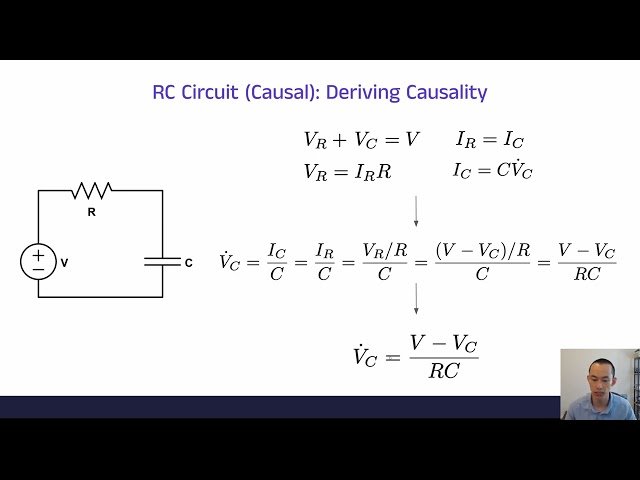
- 4 2:32 - Deriving Causality with Kirchhoff's Laws
- 5 3:54 - Implementing RC Circuit in Dyad Causal
- 6 6:21 - Block Diagram Walkthrough
- 7 9:22 - Building RC Circuit: Acausal Approach
- 8 9:35 - Component-Based Modeling Philosophy
- 9 10:18 - Defining Connectors and Pins
- 10 11:09 - Creating Partial Components One Port
- 11 12:04 - Building Resistor, Capacitor, and Inductor Components
- 12 14:01 - RC Circuit Acausal Implementation
- 13 15:13 - Visual Comparison: Causal vs Acausal Representations
- 14 17:21 - Building RLC Circuit: Causal Approach
- 15 18:41 - RLC Block Diagram Implementation
- 16 19:15 - Detailed Block Diagram Walkthrough
- 17 23:29 - Lack of Reusability in Causal Approach
- 18 24:29 - Building RLC Circuit: Acausal Approach
- 19 25:11 - Component Reuse Benefits
- 20 26:06 - Model Evolution Comparison
- 21 27:51 - Code Comparison: RC to RLC Transition
- 22 28:45 - Summary and Key Benefits
- 23 29:22 - Next Steps and Resources

