Courses from 1000+ universities
AI got cheap enough that Duolingo’s most expensive plan may not survive it. I read the earnings call transcript and opened the app to see what is actually changing for learners.
600 Free Google Certifications
Artificial Intelligence
Data Science
Cybersecurity
L'Italiano nel mondo
Introduction to HTML5
Umano Digitale
Organize and share your learning with Class Central Lists.
View our Lists Showcase
Wolfram U offers free open interactive courses, learning events and other educational resources for professional and technical development.
Review the first six chapters of Etienne Bernard's Introduction to Machine Learning: key concepts, classification, regression and clustering, with guided Wolfram Language code examples and exercises.
Import, clean, structure, visualize and publish external data with the Wolfram Language, using the Wolfram Knowledgebase and Wolfram Data Framework to extend your sources.
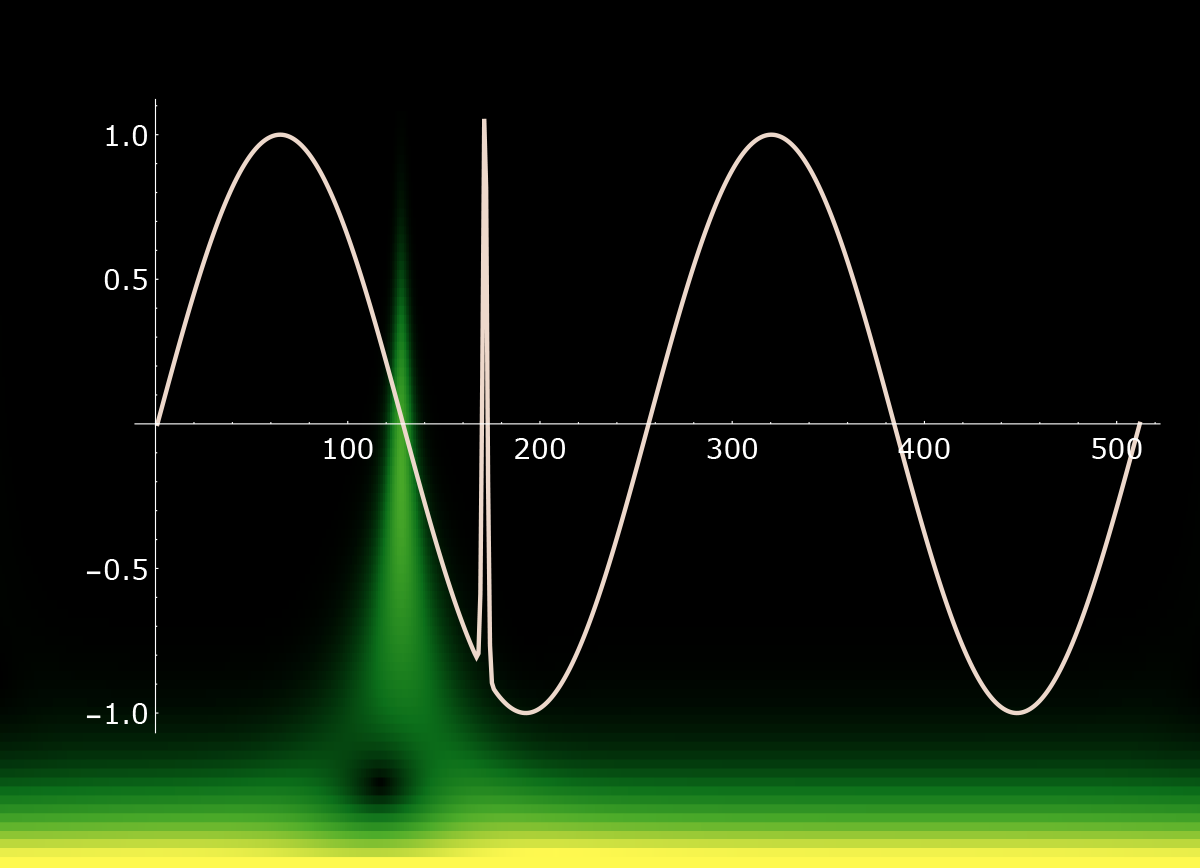
Learn wavelet decomposition of signals in the Wolfram Language: transform types, common algorithms, visualizations, and applications in denoising, edge detection, compression, and financial analysis.
Compute derivatives and integrals, solve differential equations, and apply calculus to practical problems using built-in Wolfram Language functions and interactive graphics.
Solve first- and second-order differential equations and linear systems: visualize direction fields, compute series solutions, apply Laplace transforms, and model real problems in interactive notebooks.
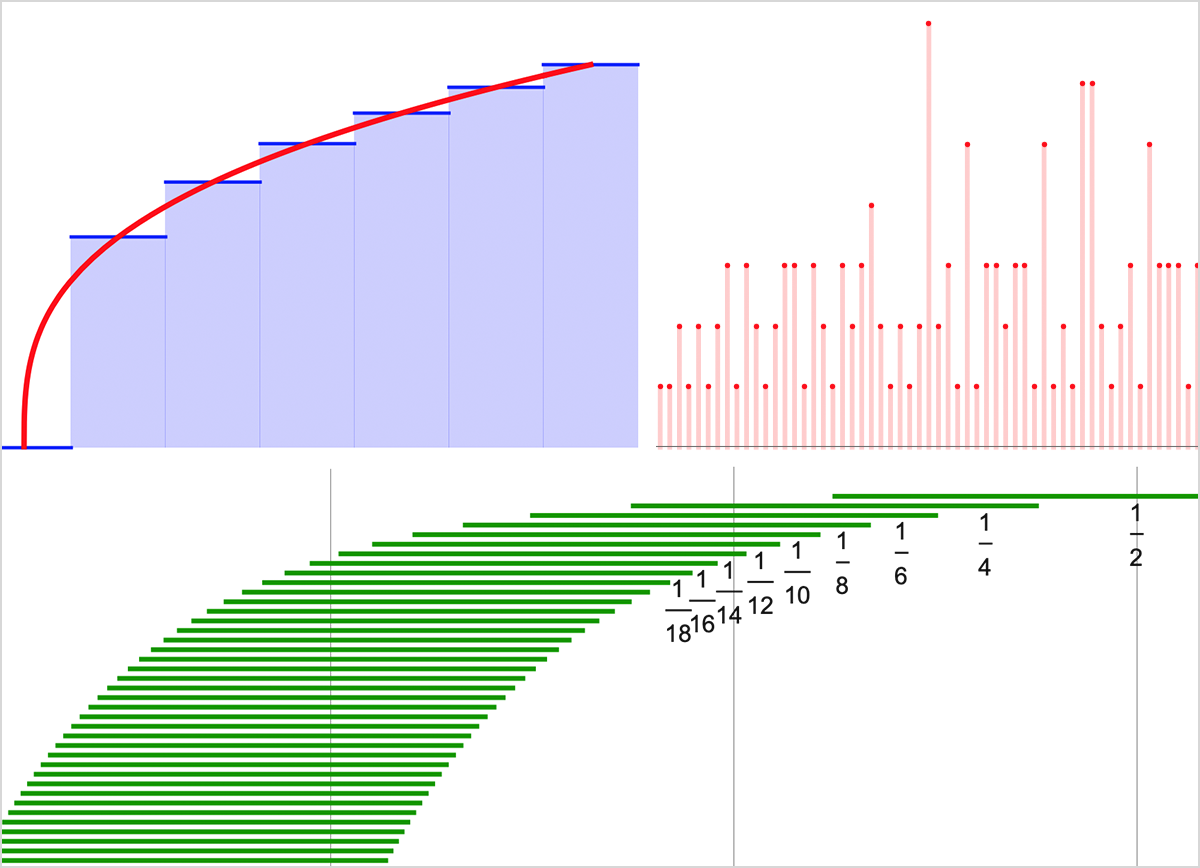
Explore the foundations of discrete calculus: work with sequences, series, permutations, combinations, probability and Riemann sums using Wolfram Language syntax, notation and number families.
Compute fractional derivatives with FractionalD and CaputoD, then use LaplaceTransform and Mittag-Leffler functions to solve systems of linear fractional differential equations in Wolfram Language.
Learn to visualize data with histograms and stem-and-leaf plots, calculate means and standard deviations, construct confidence intervals, and perform hypothesis and chi-square tests.
Learn basic probability concepts, simulate probabilities with random variables, identify discrete, continuous and derived distributions, and apply probability computations to real-world data.
Get started with Mathematica: create notebooks, enter free-form and Wolfram Language input, perform symbolic and numeric calculations, build 2D and 3D graphics, Manipulates and presentations.
Process audio in the Wolfram Language: apply audio effects, synthesize and generate signals, and analyze audio data for music, speech and broadcasting applications.
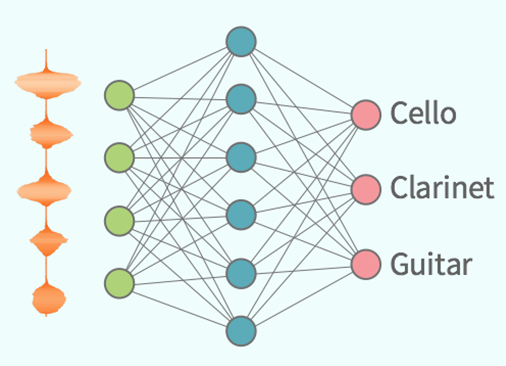
Build an audio classifier in Wolfram Language: encode audio data, apply convolutional and recurrent networks, perform network surgery on pretrained models, and demonstrate transfer learning.
Explore machine learning paradigms in Wolfram Language: use built-in automated functions and neural networks on numeric, image, audio and text data for classification, prediction and clustering.
Collect data from the web, then import, clean and prepare it for computation in the Wolfram Language and publish it to the Wolfram Data Repository.
Build and train a digit classifier in the Wolfram Language: combine layers in chain and graph containers, apply encoders and decoders, and reuse pre-trained networks.
Get personalized course recommendations, track subjects and courses with reminders, and more.