Courses from 1000+ universities
17 years ago, Krishna Kumar started offering free PMP prep online. Today, it’s a leading digital upskilling platform that helps millions upskill in AI, cybersecurity, data science, and more.
600 Free Google Certifications
Fundamentals of Neuroscience, Part 1: The Electrical Properties of the Neuron
Organic Chemistry 1
Mountains 101
Organize and share your learning with Class Central Lists.
View our Lists Showcase
Delve into the cosmetic surgery conjecture in 3-manifolds, exploring how instanton homology rules out certain surgery cases, leaving only the possibility of 2-surgery, with discussion of limitations and future developments.
Explore the mysterious world of exotic smooth 4-manifolds with Lisa Piccirillo, examining methods to identify distinct smooth structures with identical topological types.
Explore the relationship between SO(3) and SU(3) gauge theories in instanton homology for webs and foams, examining how replacing SO(3) with SU(3) affects structure and results.
Delve into the construction of real Heegaard Floer homology for 3-manifolds with involution, exploring its topological invariance, connections to Miyazawa's work, and applications to exotic RP^2-knots.
Explore key constructions for producing 'exotic' smooth structures on closed four-manifolds with non-trivial fundamental groups, examining sources of exoticness through the genus function on second homology groups.
Explore the spectral absorption properties of alumina aerosols for stratospheric aerosol injection, featuring new photoacoustic spectrometer measurements and molecular-scale calculations to assess climate impacts.
Explore the potential of cirrus cloud thinning as a climate warming mitigation strategy through the study of ice nucleation properties of aerosol particles and their effectiveness in seeding cirrus clouds.
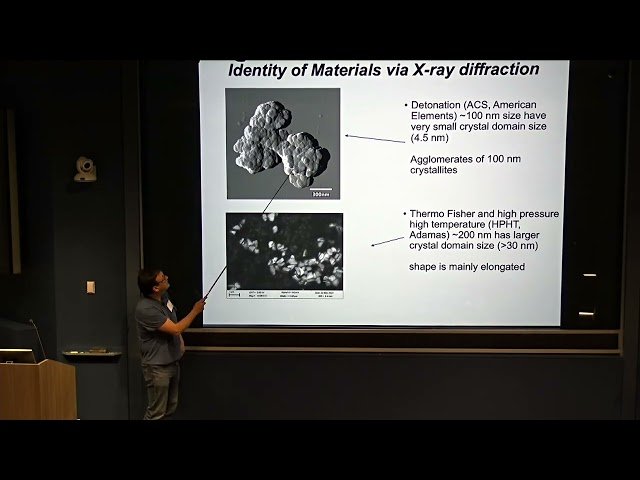
Explore the chemical and physical properties of alternative solid materials for stratospheric aerosol injection, examining their radiation interactions and stability through advanced spectroscopic techniques and simulated stratospheric aging.
Explore the viability of solid particles like alumina, calcite, and diamond as alternatives to sulfate aerosols for stratospheric solar geoengineering, examining climate impacts and chemical uncertainties through modeling and experiments.
Explore the implementation of solid materials, particularly aluminum, into climate models using CARMA, examining aerosol properties, interactions with atmospheric chemistry, and comparisons between different materials like diamond and calcite.
Explore Africa's climate response to different stratospheric aerosol geoengineering materials through simulation data, examining temperature and precipitation impacts across the continent.
Explore the practical limitations of stratospheric aerosol injection for climate cooling, including technical, geopolitical, and economic constraints that impact risk assessment and feasibility.
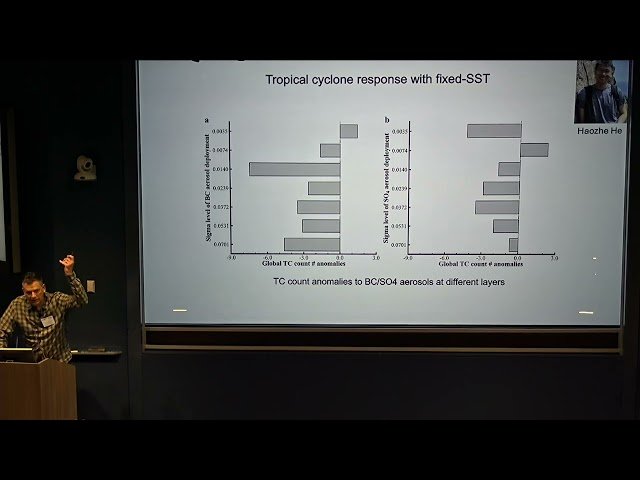
Explore the climate impacts of different stratospheric aerosols, examining how absorbing vs. scattering aerosols affect planetary cooling, ozone levels, tropical cyclones, and regional temperature and precipitation extremes.
Explore the relationship between dust aerosols and cloud phase, examining how they influence cloud radiative effects and their potential application in climate intervention through mixed-phase cloud thinning.
Explore the evolution of particle size distribution in stratospheric aerosol injection, from sub-grid processes to global impacts, focusing on how these factors influence climate models and radiative effects.
Get personalized course recommendations, track subjects and courses with reminders, and more.